Current page
Dec 8, 2025
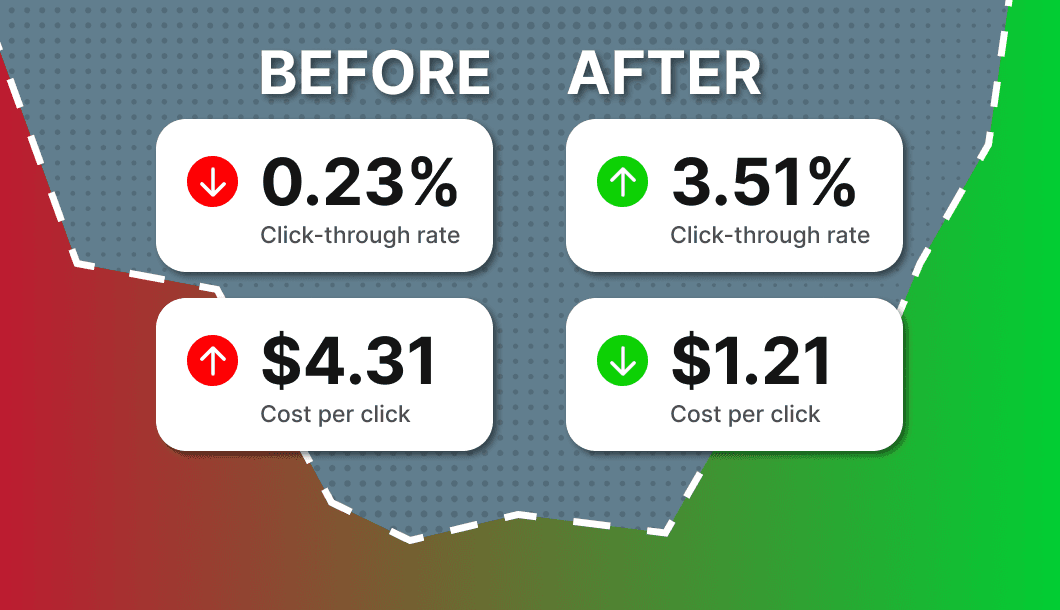
Are your YouTube ads not converting? High CPM? High CPC? Low CTR? Low-quality traffic? No sales? Here are 6 steps to fix your YouTube ads and make them convert like crazy.
Reason #1: The hook is not attracting the right audience
Problem:
The hook is probably the most important part of any YouTube ad. Because the hook determines who’s going to keep watching your ad and who is going to skip it.
So your hook affects everything downstream in your sales process.
Bad hook -> attracts the wrong type of people -> they are either not going to click the ad once they realise it’s not for them later on in the video -> and if they click the ad, they are not a good fit for your offer -> no sales
Example:
Let’s say you have an agency and your offer is “helping e-commerce store owners scale from $100k a month to $500k a month”.
Now, let’s say this is your hook: “Making money in e-commerce was never this easy. We made $500k with our own store last month by doing these 4 simple steps”.
In theory, it sounds like a solid hook, but it’s not clear who this ad is for. Is it for established store owners who want to scale? Or is it for people who want to start their own e-commerce store?
Because it isn’t clear who the ad is for, also the beginners will watch this ad, which is bad because they won’t bring you any money, and because it’s going to send bad signals to Google, which might lead to the algorithm honing in on the beginners, rather than the established store owners.
Solution:
Think of your hook as targeting. You want to qualify the audience and make it very clear who the ad is for and what the ad is about, so only the right type of person will be hooked, curious, and interested in watching it. You want all the unqualified people to click “skip” right away.
This way, you get clean and qualified traffic and send a much purer signal back to Google.
So this would be a better hook: “Over the last year, we’ve helped over 56 ecom store owners scale from $100k months to steady $500k months. Not by tearing everything apart and redesigning their entire business, but by implementing 4 simple steps. Let me explain…”
With this hook, it is very clear who the ad is for and what the ad is about. And the audience that falls into this “targeting” will probably be hooked, curious, and interested to find out what the “4 simple steps” are.
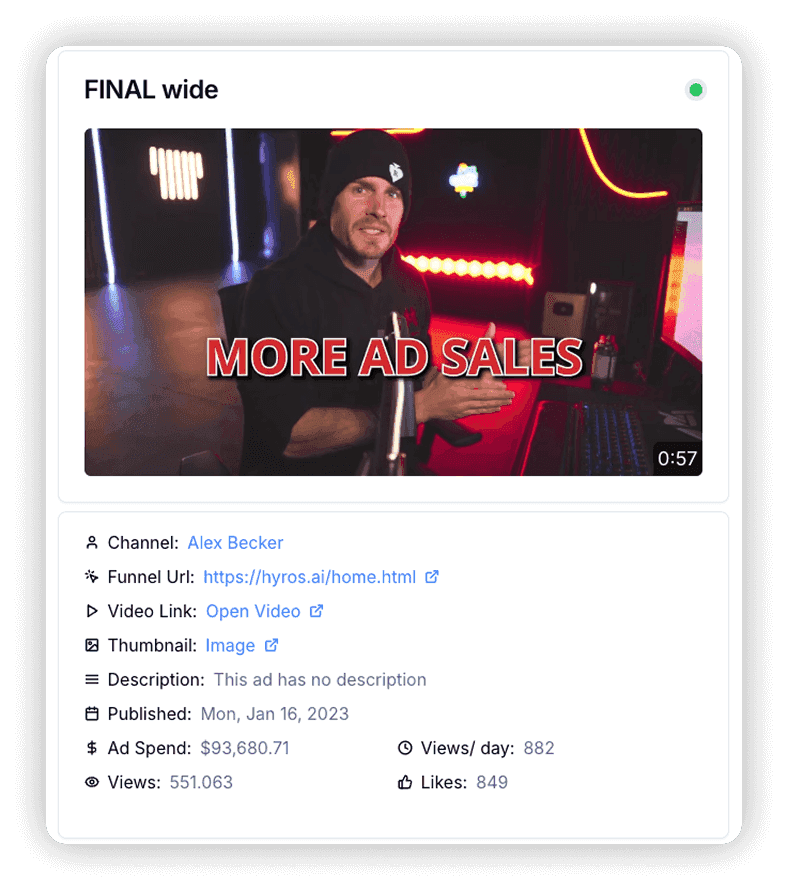
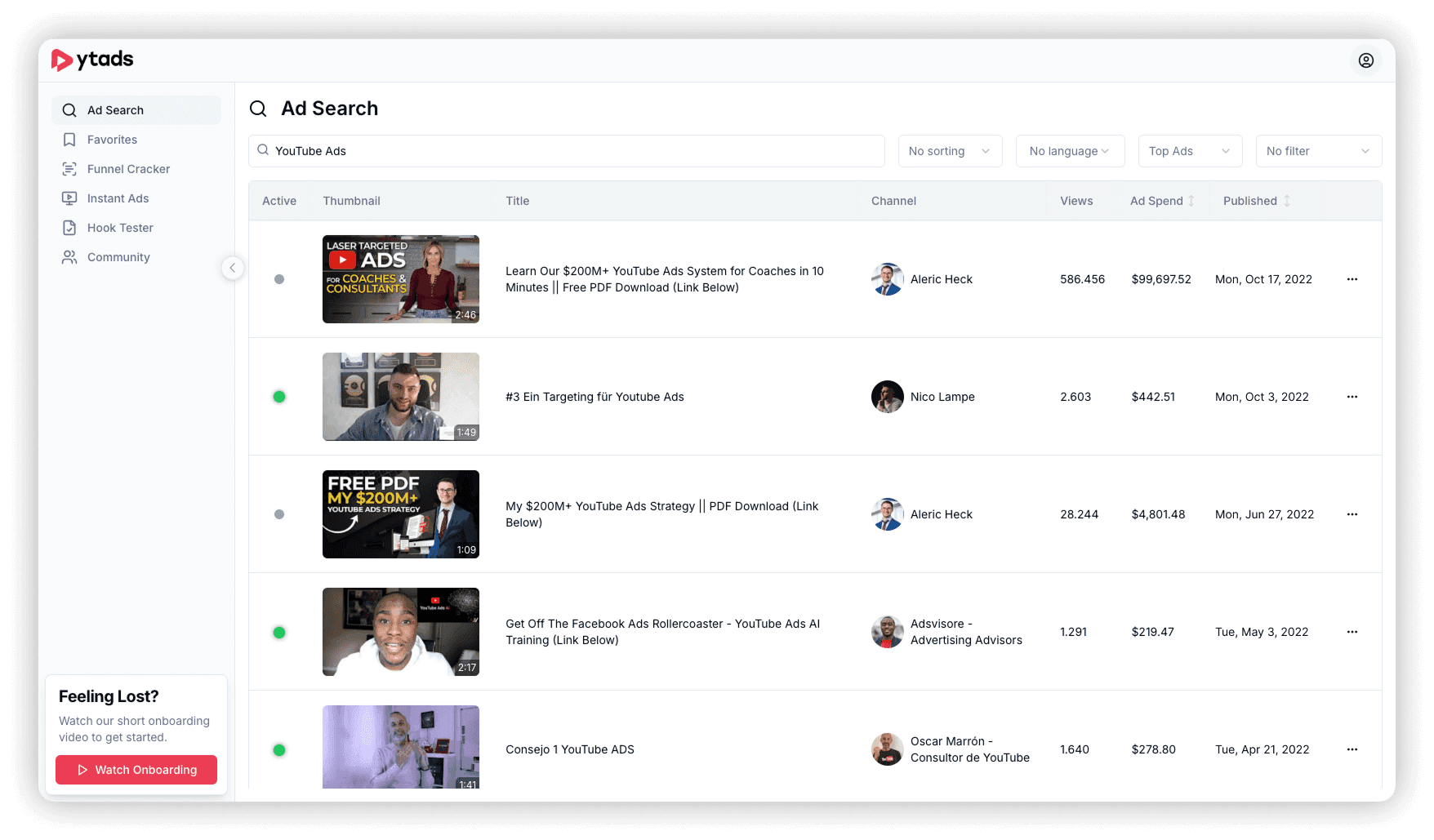
And the best place to find inspiration for great hooks is by browsing through a YouTube ad library or a YouTube ad spy tool like for example, YTADS.
Reason #2: Low trust due to visual appearance
Problem:
People only click, convert, and buy if they trust you and your business.
Normally, trust is mainly created with your case studies, your testimonials, and your reviews.
But the audience decides whether they trust you or not right in the first few seconds of the ad.
And the problem is, your case studies, testimonials, and reviews will probably have to be buried later on in the ad or in your sales process. We can’t frontload all of that information right in the first few seconds of the ad.
So, how does the audience decide whether they trust you or not? And how do you influence this?
It’s the first impression. It’s how you appear.
Example:
If you see a YouTube ad for a health or weight loss offer, but the person is looking unhealthy and overweight himself, you’re obviously not going to trust him and skip the ad.
If you see a YouTube ad where someone is claiming to show you how to start a successful business and get rich, but the person is wearing worn-down clothes, sitting in a basement, with poor lighting, and bad camera quality, you’re obviously not going to trust them and skip the ad.
Or if you see a YouTube ad for a dating offer teaching men the “insider secrets of what women want and what’s the best way to get a date with them”, but the person in the ad is a man, you’re obviously going to trust him much less than if it were a woman, because how would he know?
Solution:
Try to think about how the audience would expect you to look and appear, and then try to fulfil those expectations.
For a health and weight loss YouTube ad, you should look fit, healthy, and somewhat muscular.
For a business opportunity YouTube ad, you should look well-groomed, well-dressed, with good camera quality, good lighting, and an aesthetic and expensive-looking background/scene (luxury apartment, luxury hotel lobby, beautiful scenery, cigar or yacht club, sports car, …).
For a dating offer teaching men the “insider secrets of what women want and what’s the best way to get a date with them”, you should be a good-looking woman (ideally, exactly their type) and be in a situation that’s associated with dating (in a restaurant or bar, walking in a park, at home on the couch or bed, …).
And if you don’t have the possibility to appear like this yourself, and can’t afford to hire a speaker or actor for the ads, you can use AI-generated YouTube ads made by tools like YTADS.
Here you can choose the perfect AI presenter for any offer. You can generate ads for a health offer using a doctor, ads for a weight loss offer using a fit personal trainer, ads for a business opportunity offer using a wealthy guy in a penthouse, and so on.
Reason #3: Using the wrong market awareness stage
Problem:
Your audience is not a homogeneous group. Your audience can be grouped into different segments depending on how far into the journey they are.
These segments are called the 5 market awareness stages. And if you’re not intentional about it and just create ad messages randomly by gut feeling, it might happen that you get those awareness stages mixed up.
Maybe you’re targeting “awareness stage 1 people” with an ad that’s catering to “awareness stage 5 people”. That’s obviously not going to perform well.
Or maybe the majority of your market is in “awareness stage 2”, but you’re constantly creating and testing “awareness stage 4 ads”. Those ads are not going to scale well, because that’s not the type of ad message the majority of your market needs to hear to resonate with it.
Example:
Let’s say you’re selling a vitamin D3 supplement for getting clear skin…
Unaware audience:
They don’t know that they have a problem with their skin
Problem-aware audience:
They know that they have a problem with their skin, but that’s it. They don’t know any solutions yet.
Solution-aware audience:
They know that they have a problem with their skin, and they also know different solutions for it, but haven’t decided which solution to go for.
Product-aware audience:
They know that they have a problem with their skin, and they’ve already decided they want to solve it with the vitamin D3 solution, but haven’t decided on a specific vitamin D3 product yet.
Most aware audience:
They know that they have a problem with their skin, and they’ve already decided that they want to solve it with the vitamin D3 solution, and they’ve also decided that they want to get your specific vitamin D3 supplement, but haven’t actually bought it yet.
Now, let’s say you’re running a “product-aware ad” that’s showing why your vitamin D3 supplement is better than other vitamin D3 supplements, but the majority of your market, or the audience you’re specifically targeting, is in the “problem-aware stage”.
This means the audience does know they have a problem with their skin, but doesn’t know that vitamin D3 is the perfect solution for that. So arguing in your ad why your specific vitamin D3 supplement is the best isn’t going to get them to convert because they don’t know how that relates to their skin issues. That’s why they’re going to skip this ad.
Solution:
You have to meet them where they’re at in the journey and create your ads with intention and the awareness stage in mind.
Unaware audience:
You have to artificially create a problem for them, make it really painful, and then pitch your solution.
Problem-aware audience:
You have to remind them of the problem, make it really painful, and then pitch your solution.
Solution-aware audience:
These people are comparing different solutions that can solve their problem (supplements for better skin, skin lasering, skin care products, surgery, …). You have to convince them that your solution is the best one.
Product-aware audience:
They have already decided on a solution and are now comparing different products (supplement from company A vs. supplement from company B, …). You have to convince them that your product is the best one.
Most aware audience:
They already want to buy it, but haven’t done it yet. So give them a good reason to buy right now. Use scarcity, urgency, special discounts, and so on.
Reason #4: Incongruent marketing message
Problem:
Oftentimes, the message of the ad isn’t perfectly congruent with the message of the landing page.
This results in high bounce rates on your landing page, because the user was expecting to see the same message as the ad, not a different one.
Example:
Let’s say your ad message is “how to increase your profit by 20%” and your landing page headline is “how to cut down cost by 20%”.
Even though that’s effectively very similar, it’s not what the user was expecting and not what was promised in the ad. There’s a slight disconnect, a slight break in logic. That’s why many users will leave the page again.
Solution:
Make sure your marketing message is congruent all the way through the entire funnel/sales process. The marketing message should be aligned in every step.
One way to make sure your ad message is congruent with your landing page copy is by using the YTADS AI to write your ad scripts. First, it takes all the content from your landing page and identifies your offer and marketing message. Afterwards, it uses that information, combined with the highest-performing, proven YouTube ads from the YTADS ad library, to write your own pre-tested ad scripts that are perfectly congruent with your landing page.
Reason #5: Trying to accomplish the entire sales process in the ad
Problem:
Some advertisers try to do too much in the ad.
In most cases, the goal of the ad is not to sell the product (except maybe low-ticket and e-commerce products that are impulse purchases). In most cases, the goal of the ad is only to get the user to click the ad and enter your sales process.
Example:
Let’s say you’re selling a make-money-online business opportunity course.
Then don’t talk about that course in your ad. Don’t talk about the price. Don’t talk about the content. Don’t talk about its features.
All of that is irrelevant at this point; it’s too early for that. It only becomes relevant later on in your sales process once the prospect is more educated about everything. Inside the ad, all that information would just overload the viewer and create even more questions.
Inside this business opportunity ad, you should leave any technical details about your actual product out and only talk about how awesome the business opportunity is, how well it works, what results it gets, who it is for, etc.
Solution:
You always only want to sell the next step. You have to gradually move them through your sales process one step at a time.
In case of a call funnel, it would look like this…
Your ad only sells the click to your landing page.
Your landing page only sells the booking of a free strategy session.
And after all that, the free strategy session then sells the actual product.
The same way you don’t marry someone on the first date, you don’t try to sell a high-ticket item directly on the very first touchpoint. You go step-by-step.
You can use the YTADS ad library to analyse how other successful advertisers in your market are doing this.
Reason #6: Wrong ad message and ad angle
Problem:
If none of the previous tips helped, maybe you’re just using an ad message or ad angle that simply doesn’t resonate with your market.
Example:
Let’s say you’re selling a weight loss coaching program for women in their 40s.
And let’s say right now your ad message/ad angle is “lose weight to be more fit”. This is essentially what they want to do, but maybe it just doesn’t connect with them. Maybe they don’t feel understood enough, because maybe being fit isn’t the ultimate end goal, and it’s something else that comes with being fit.
Maybe they want to lose weight, not just to be fit, but especially to be fit enough to play with their kids without constantly being out of breath.
Or maybe they want to lose weight, not just to be fit, but especially to look beautiful for their husband again.
Or maybe because they’ve always wanted to run a marathon. Or because they want to feel younger again. Or because they are currently constantly in pain.
Solution:
As you can see, there are so many different ad messages and ad angles for the same offer and the same audience that you can explore.
The solution is simply to test more of them. Some will perform okay. Some will perform worse. And with some, it will make “click”, and the ad performance will skyrocket. That’s when you’ve hit the core desire of the audience. That’s when you have message-market-fit.
You can find out what ad messages are hitting that core desire of your audience by looking at the top-performing ads for your type of offer in the YTADS ad library.
And then you have to create lots of ads with those insights and launch and test them.
And if you can’t afford, or don’t have the time to brainstorm, write, film, and edit dozens of YouTube ads manually yourself, you could also use YTADS to create high-converting YouTube ads in minutes with just a few clicks.
YTADS has data from millions of real YouTube ads with over $6 billion of ad spend. The YTADS AI model uses that data to create pre-tested ad scripts that are pretty much proven to work. And the YTADS AI Video Ad Pipeline then turns those pre-tested, proven ad scripts into well-edited, hyper-realistic YouTube ads that you can launch and test right away. Not filming or editing required.
This allows you to test hundreds of YouTube ads every week and find winning ads as fast as possible, without having to have a big team or anything.

" transform="translate(3 3)" width="408.8293105604056px"/></svg>)